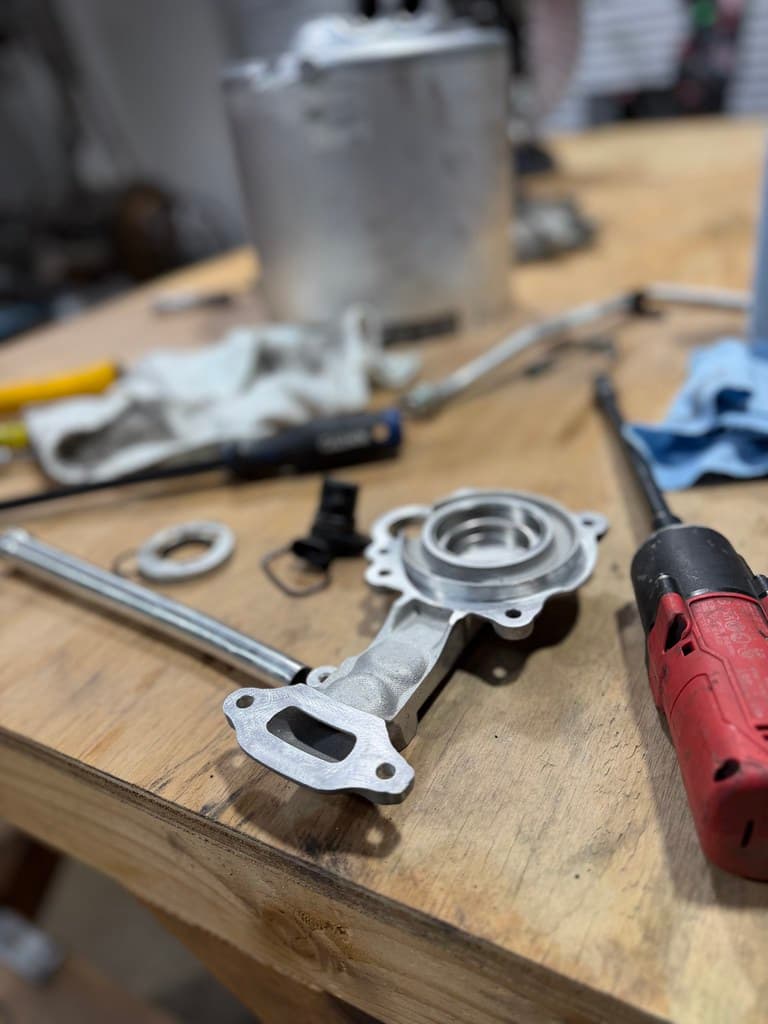
Coolant Deletes are one of the most common services we provide here at Autocarbon. They are also one of the services we get the most questions about.
Large Drive Units (LDUs) have a known issue- and that is a faulty seal within the stator housing that allows coolant to leak internally, which can damage the motor's internal components. As best explained by Amprevolt, Teslas design of sending coolant into the motors spinning rotor shaft was in order to help keep the motor cooler overall. Coolant in these drive units travel through the motor stator, motor rotor, gear box and inverter power electronics. Thus when coolant seals within the drive unit leak, it is likely to cause severe damage to the motor and electronics by shorting out the stator and seizing the rotor if left unaddressed.
That is where the "when not if" effect comes into play. This LDU "flaw" WILL inevitably happen to your unit at some point. So, when is the best time to address this issue? The only true answer to this is, now. This service can be done as a preventative measure if caught early enough. It is important to note that this issue of leakage can occur for many miles before you get notification or complete shut down of the car. It is best to get it done as a preventative measure to avoid having to replace the unit entirely.
This issue was discovered by Tesla's enthusiasts and tinkerer's first and then a solution was developed. A few vendors sell replacement manifolds or just a seal delete cap that can be pressed in.
At some point Tesla has attempted revisions to fix this issue without a delete but with a different seal, to no avail. The root cause of this leak at the rotor seal is wear on the rotor flange itself, overtime a groove is developed where the rotor meats the seal. The rotor can spin up to speed's of 16,000 rpm with a gear ratio of 9.73 - 1.
The good news is that Tesla's own engineers have caught up to this issue and all new units with part number 100233-01-U (revision U) or newer have this seal delete retrofitted. It was realized later that removing cooling to the spinning rotor does not adversely affect the drive unit. Coolant still continues to flow and cool the inverter with the delete.
Years and Models effected by this fault: 2012-2020 Model S & Model X
TECH TIPS Locate your speed sensor - check to see if it appears wet or has signs of corrosion.These are both indicators that the leak has already started. If you see either, consult your Tesla mechanic as soon as possible. A coolant delete or Rebuild still may be viable for you. If your sensor is dry with no signs of corrosion that is great news - likely you have no current leakage and have ideal conditions for a coolant delete.
Please note that if your LDU is currently under warranty with Tesla, having this service will void your warranty. Tesla will only provide replacement service for this. If you have a warranty it is recommended to check for a wet speed sensor and request a replacement under warranty.